FOR PRE-ORDER ONLY – (Expected Delivery in Q1 of 2027.)
Halloween With Kiwi
A Printed /θ/ and /ð/ Speech Therapy Storybook Featuring Contextual Facilitation | Pretzel Learning, LLC
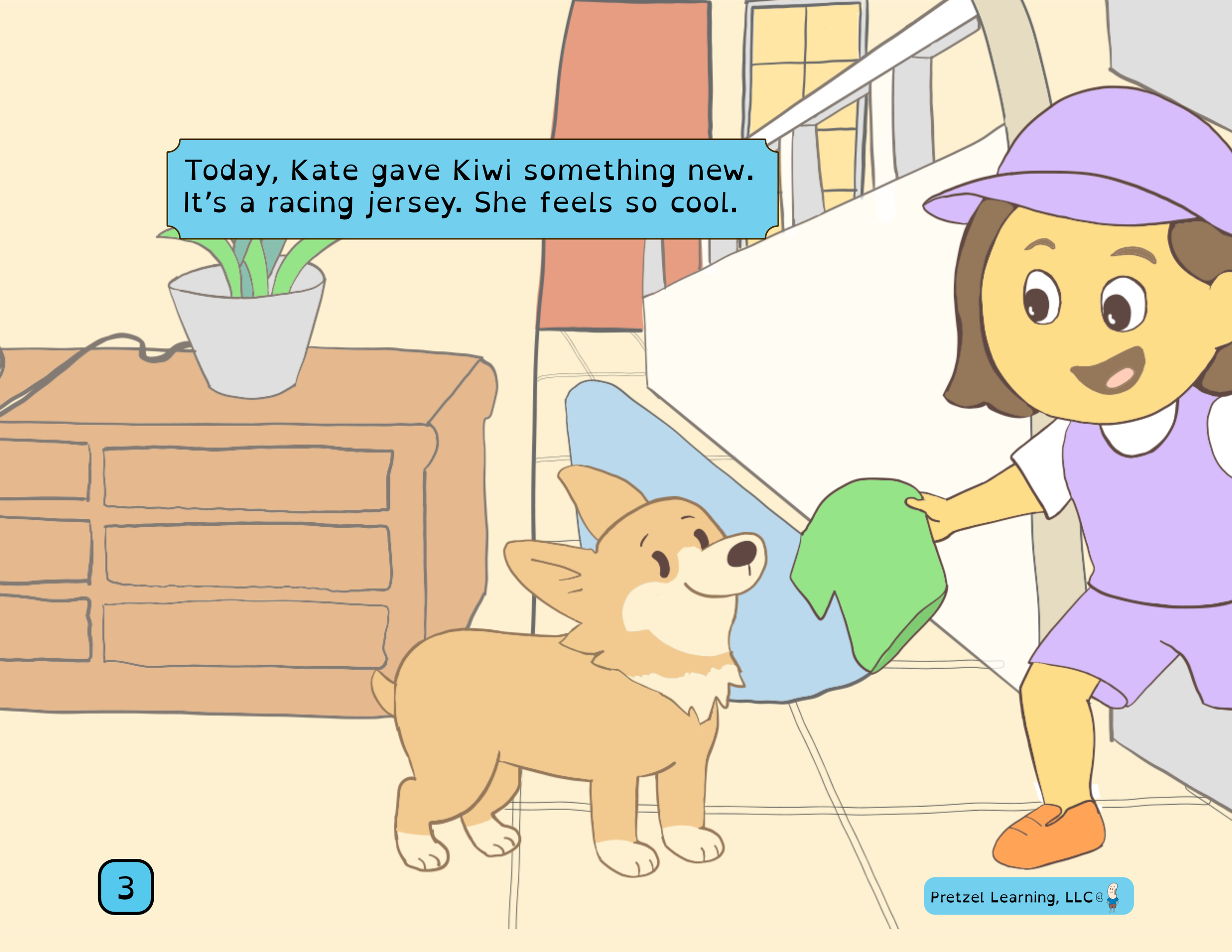
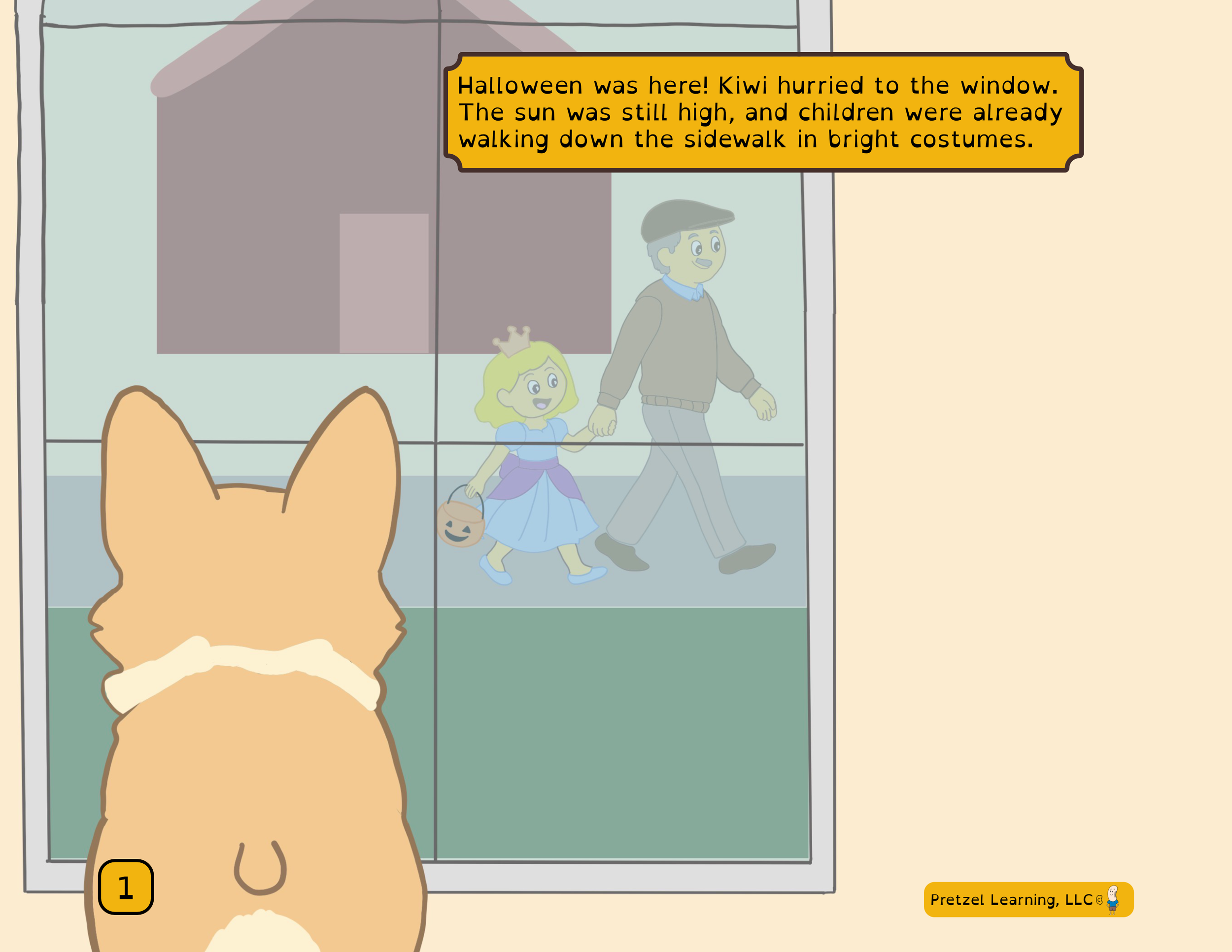
Celebrate Halloween with Kiwi the Corgi in this engaging, hand-illustrated speech therapy storybook designed to support articulation, language development, phonological awareness, and meaningful communication!
Kiwi is excited for Halloween, but first, she needs the perfect costume! With help from Gabby and Kate, Kiwi explores several costume ideas before finding just the right fit.
Later, while trick-or-treating, Kiwi meets Theo, a friendly dog dressed as a wizard. When an unexpected accident interrupts their adventure, the new friends discover the importance of kindness, sharing, and problem solving.
Through Kiwi's experiences, students explore friendship, cooperation, and emotional awareness while practicing targeted speech sounds within a meaningful narrative.
Purposefully Designed for Speech Therapy
Unlike traditional children's books that are later adapted for therapeutic use, Halloween With Kiwi was developed specifically for speech-language therapy from the very beginning. Its narrative, vocabulary, illustrations, and speech sound targets were intentionally selected to support meaningful communication practice.
Designed for SLPs and SLPAs working with individual students or mixed-goal therapy groups, the storybook provides opportunities to address articulation, language, phonological awareness, and social communication objectives through a single narrative.
Its most distinctive feature is an intentional two-part contextual facilitation structure, designed to offer progressively more complex phonetic environments for practicing voiced and voiceless "TH" sounds.
A Two-Part Approach to Contextual Facilitation
The 28-page illustrated narrative emphasizes voiceless /θ/ and voiced /ð/, commonly known as the "TH" sounds.
Some students substitute /f/ for /θ/ or /v/ for /ð/. Because these sounds share certain articulatory characteristics, their presence may create additional challenges for students working to establish accurate "TH" productions.
Halloween With Kiwi was deliberately written in two sections:
Part One: Controlled Articulation Practice (Pages 1–14)
The first half emphasizes /θ/ and /ð/ while intentionally excluding /f/ and /v/ from the narrative.
This creates a lower-competition phonetic environment for students who may benefit from practicing "TH" sounds without encountering these potential substitution sounds.
Part Two: Increasing Phonemic Complexity (Pages 15–28)
The second half reintroduces /f/ and /v/ alongside the primary "TH" targets.
This allows clinicians to introduce more challenging phonemic contrasts and practice maintaining accurate /θ/ and /ð/ productions during connected speech.
Each section contains its own beginning, middle, and ending, allowing clinicians to use either half independently or progress through the complete story across multiple sessions.
This application of contextual facilitation provides flexibility for clinicians selecting speech sound environments based on individual student needs.
Supporting Language, Social Communication, and Problem Solving
Beyond articulation, Halloween With Kiwi provides opportunities to develop expressive and receptive language through familiar situations involving choices, friendships, and unexpected challenges.
As Kiwi explores costume options, students can practice descriptive vocabulary, categorization, comparing and contrasting, and expressing preferences.
When Kiwi meets Theo, clinicians can introduce discussions about developing friendships, conversational exchanges, and understanding others' perspectives.
Later, an unexpected accident provides opportunities to identify problems, predict outcomes, consider solutions, and discuss how the characters respond.
These events also support emotional awareness, empathy, cooperation, and flexible thinking.
The story's two-part structure offers additional flexibility for sequencing and retelling activities, allowing clinicians to focus on individual sections or the complete narrative.
Speech and Language Goals Supported
Primary Articulation: /θ/ and /ð/ in connected speech
Contextual Facilitation: Deliberate exclusion and later introduction of potentially competing /f/ and /v/ sounds
Phonological Awareness: Sound identification, auditory discrimination, and phonemic contrasts
Expressive and Receptive Language: Vocabulary development, descriptions, categorization, and comprehension
Narrative Skills: Sequencing, retelling, WH questions, and story comprehension
Higher-Level Language: Inferencing, predictions, comparing and contrasting, and cause-and-effect reasoning
Problem Solving: Identifying challenges, evaluating solutions, and flexible thinking
Social Communication: Friendship, conversational exchanges, empathy, and cooperation
Emotional Development: Identifying feelings, perspective-taking, and adapting to unexpected situations
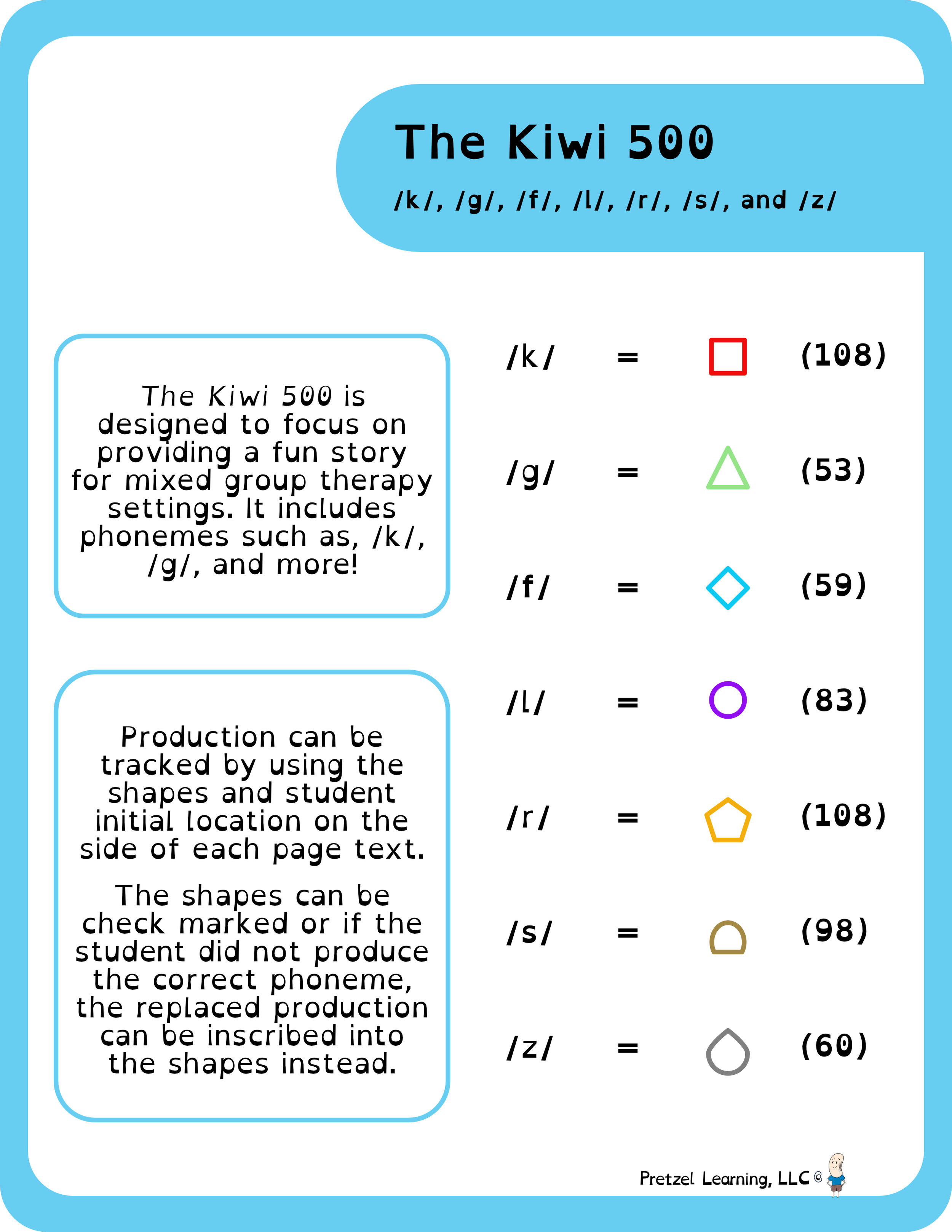
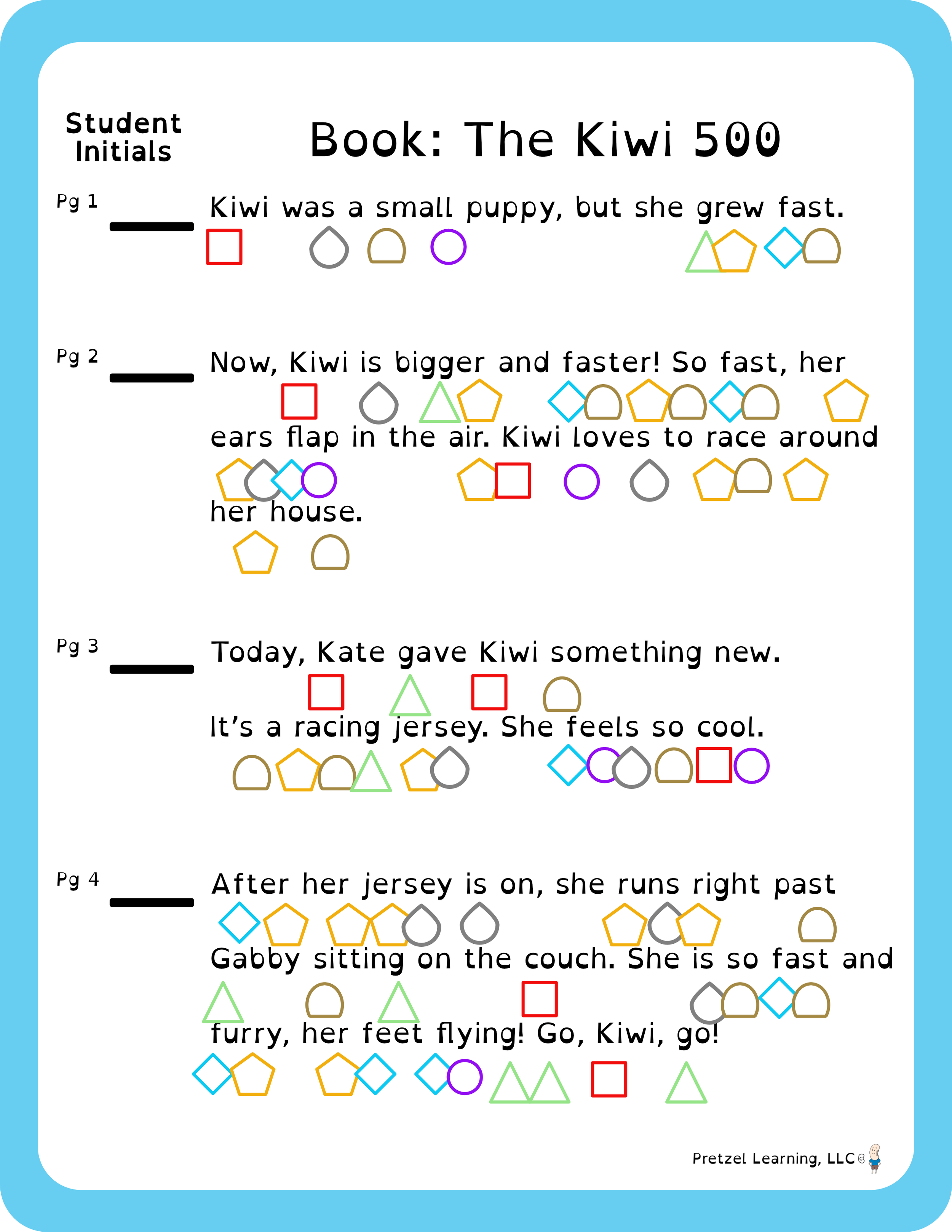
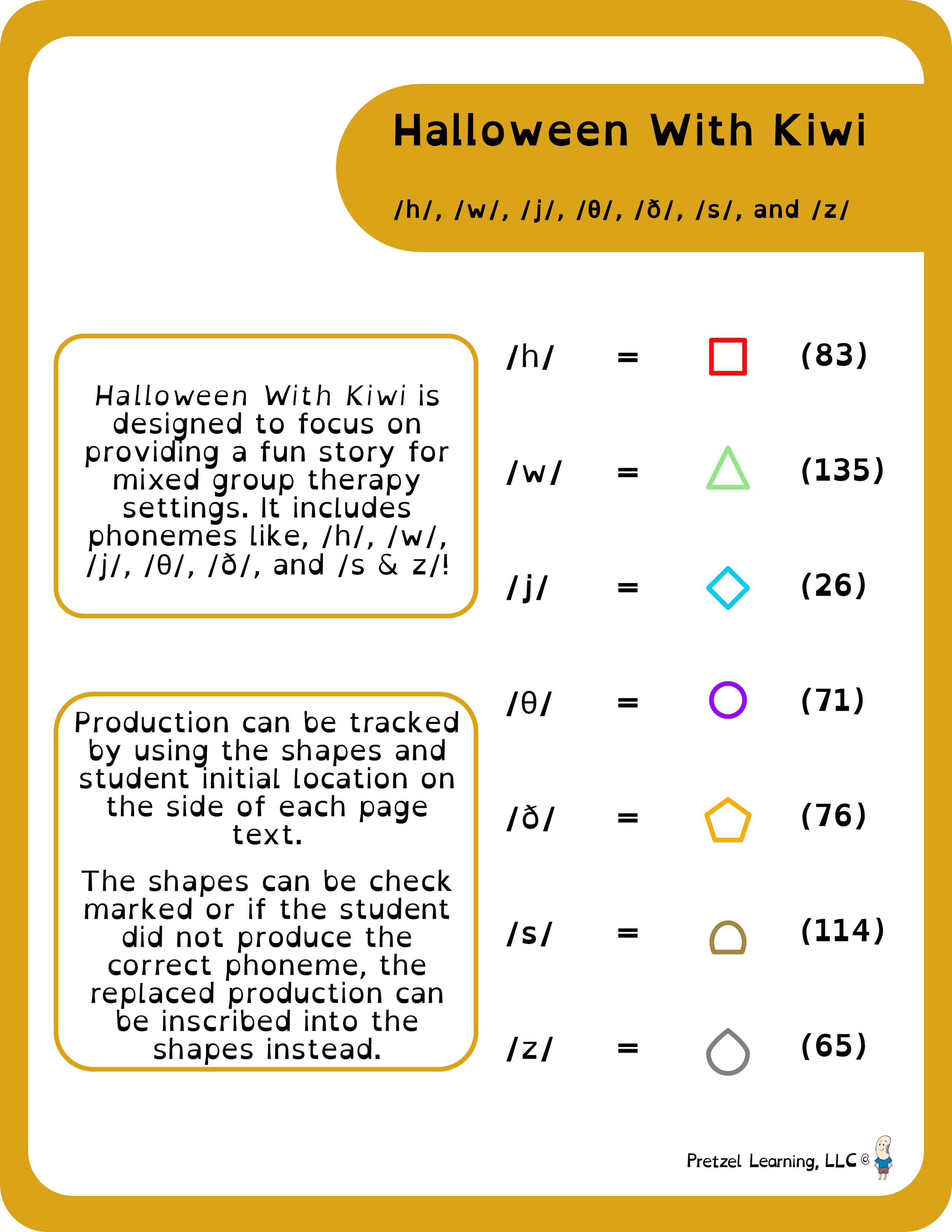
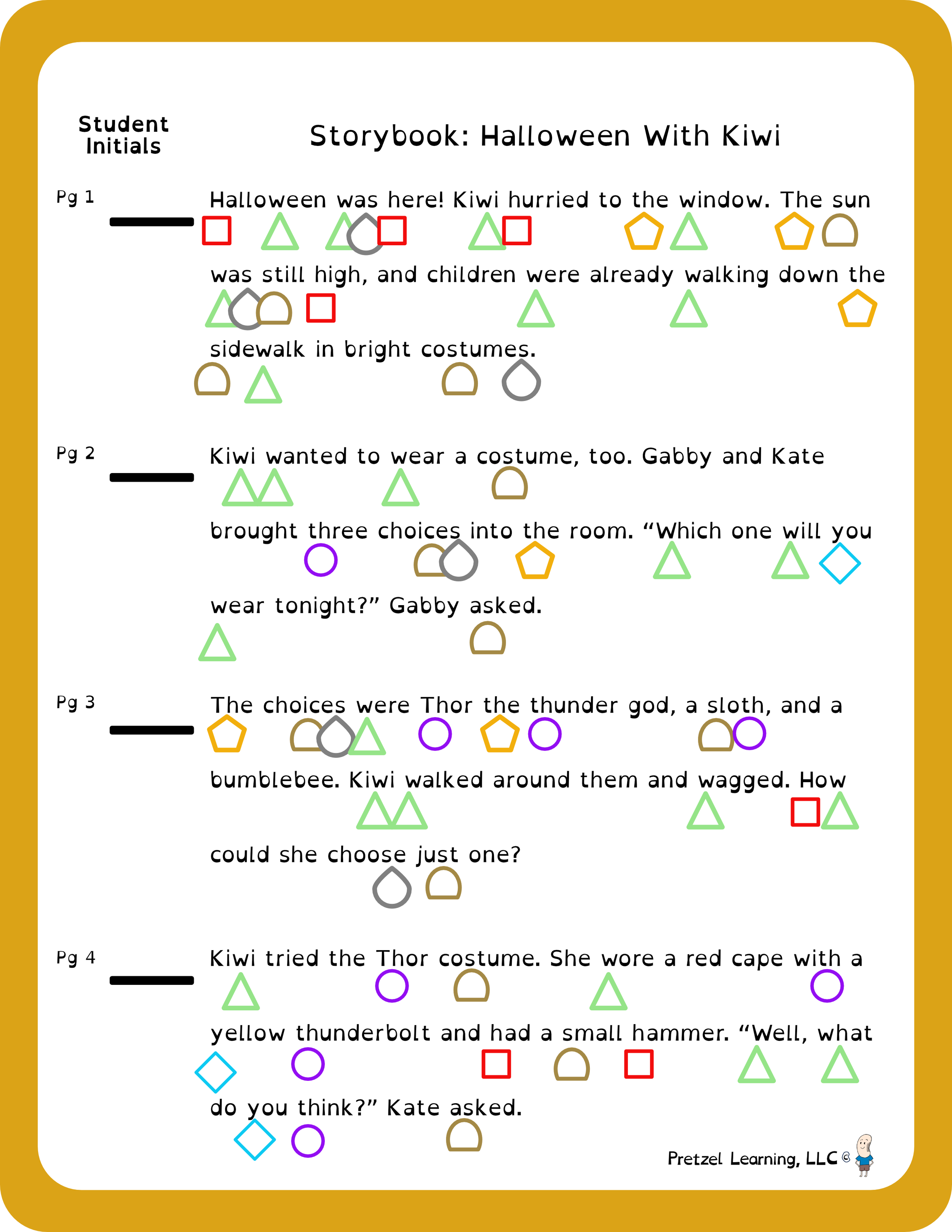
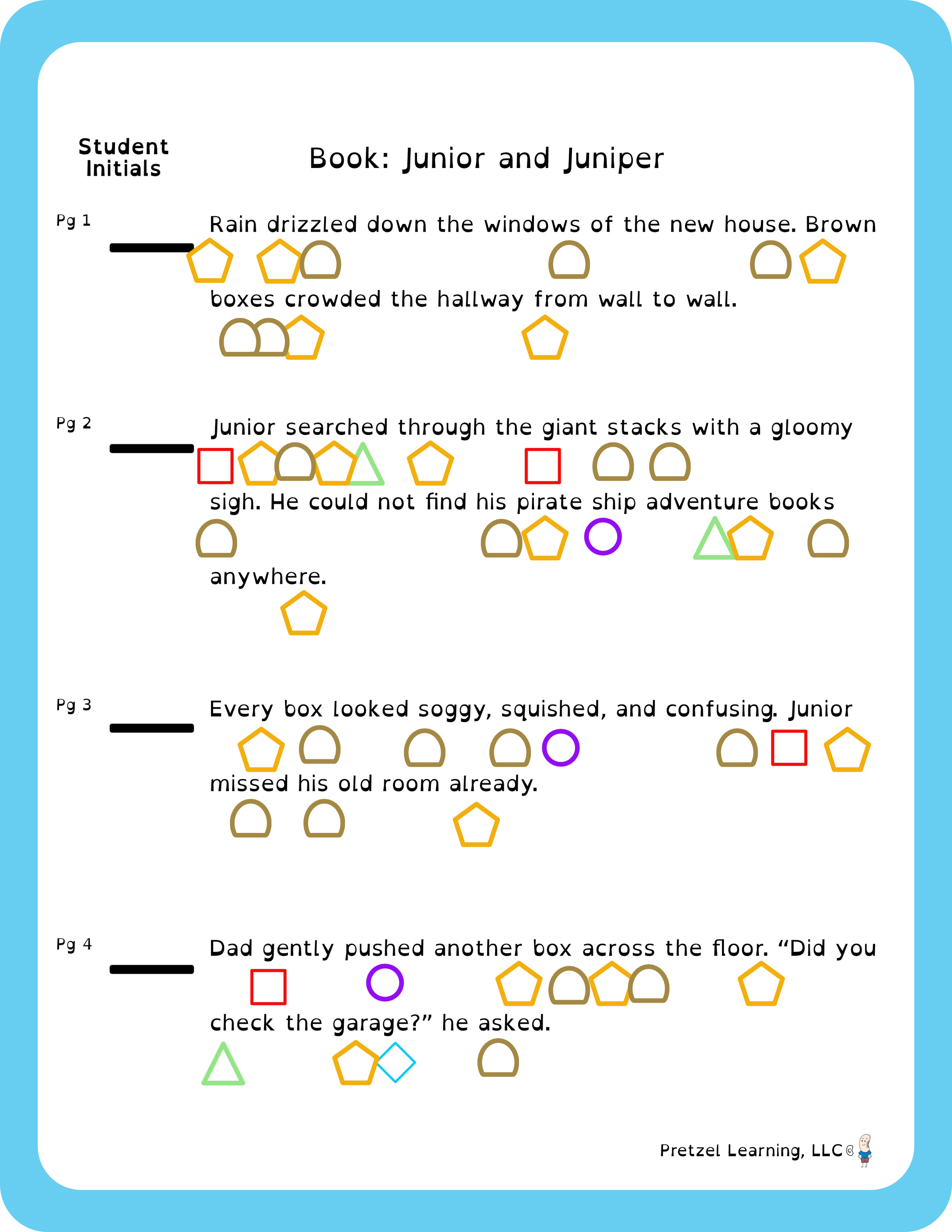
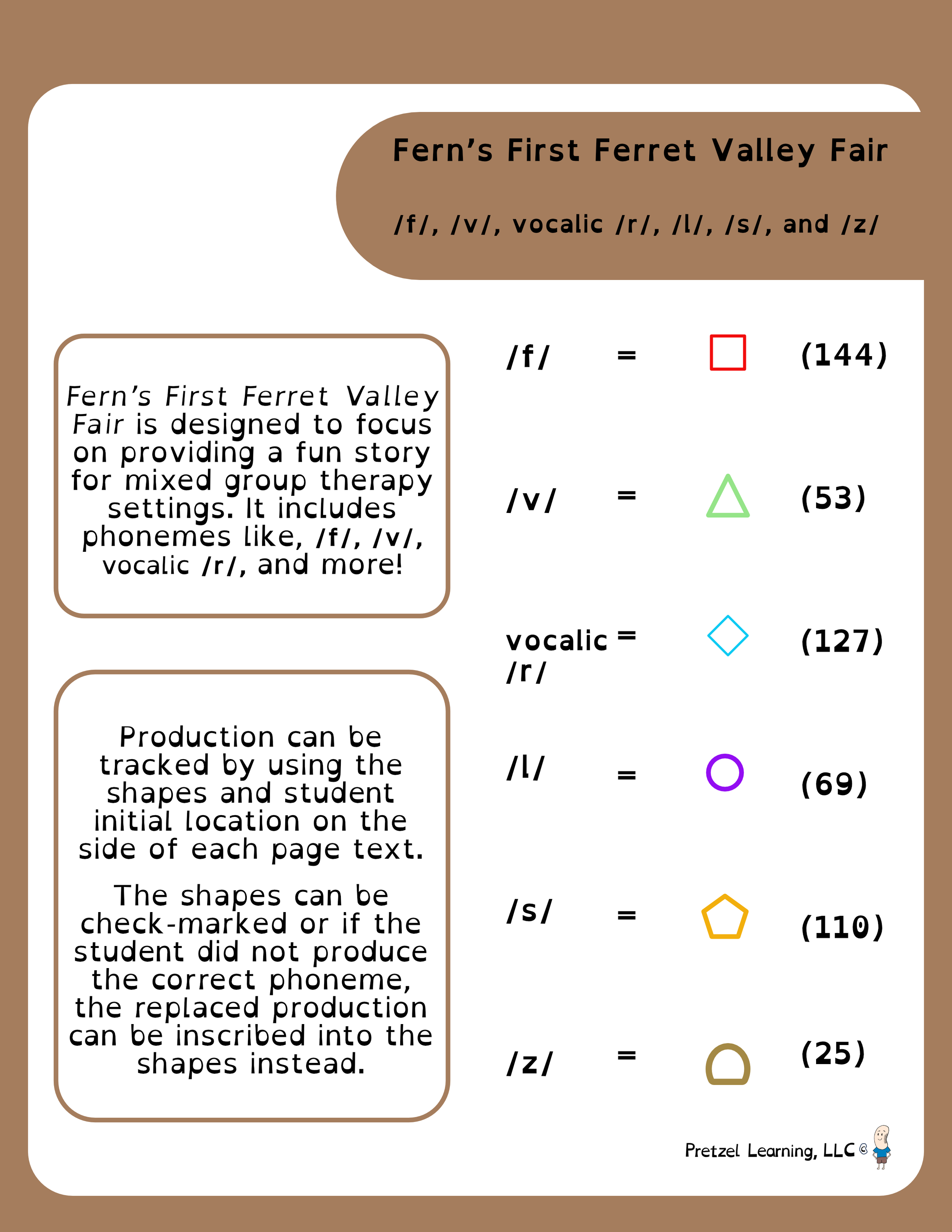
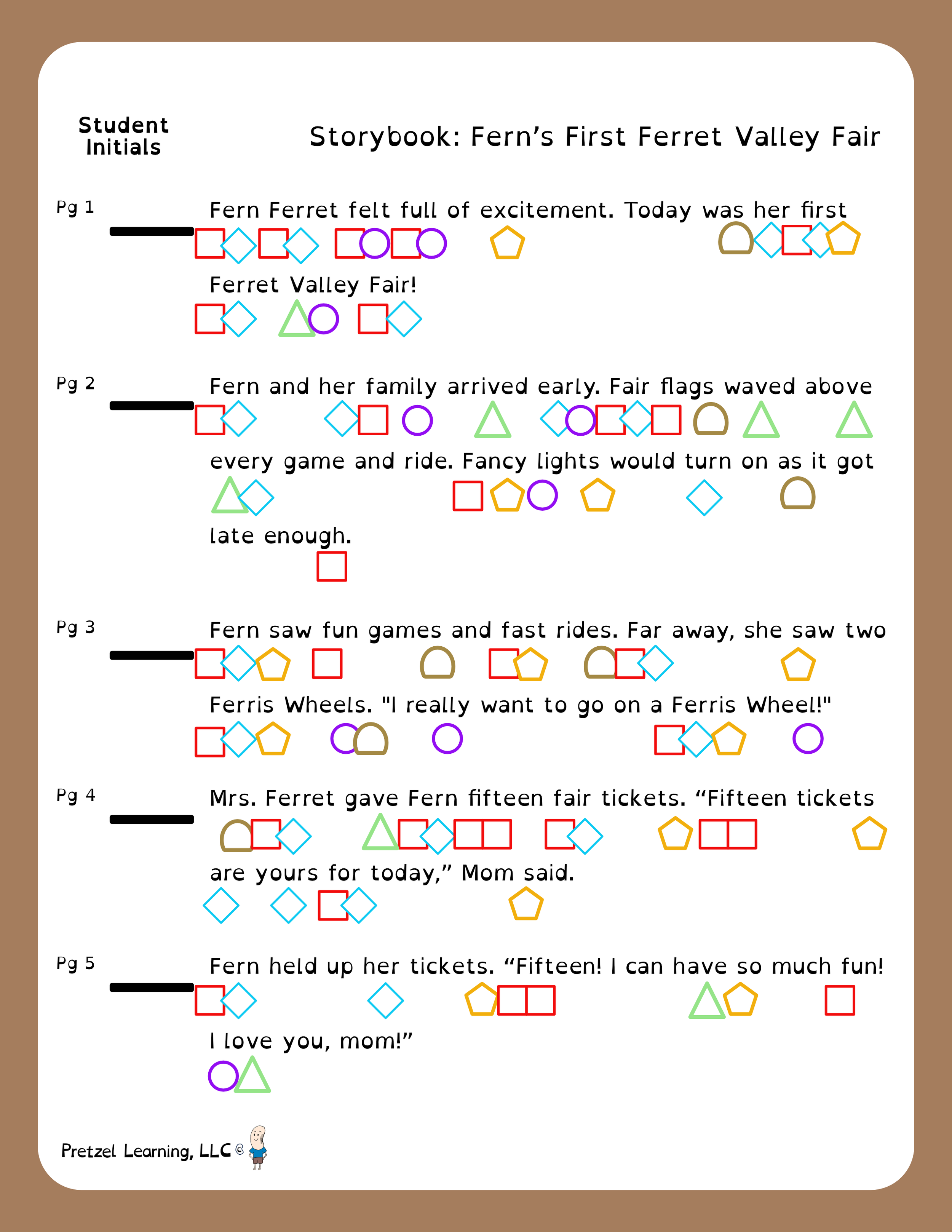
The printed storybook also includes an articulation data tracker to help clinicians identify target opportunities and document student productions throughout the narrative.
More Than a Storybook: Coordinated Therapy Activities
At Pretzel Learning, LLC, we believe speech therapy storybooks should serve as a foundation for meaningful, connected learning and not simply as supplemental reading materials.
That's why Halloween With Kiwi was developed with coordinated articulation, language, and phonological activities in mind from the beginning.
These resources build upon the book's characters, vocabulary, narrative events, and speech sound targets, allowing clinicians to reinforce familiar concepts across multiple therapy sessions.
Companion activities may include articulation practice, phoneme tracking, auditory discrimination, phonological awareness exercises, vocabulary development, and narrative-based language activities.
Coordinated companion activities are available separately as digital downloads on the Pretzel Learning website. These supplemental resources are not included with the purchase of the printed storybook.
Whether used independently or alongside its companion activities, Halloween With Kiwi provides clinicians with a flexible resource for addressing diverse communication goals while keeping students engaged in a story about friendship, kindness, and solving problems together.
Bring storytelling and speech therapy together with Pretzel Learning, where every story is built with communication in mind.
FOR PRE-ORDER ONLY – (Expected Delivery in Q1 of 2027.)
Halloween With Kiwi
A Printed /θ/ and /ð/ Speech Therapy Storybook Featuring Contextual Facilitation | Pretzel Learning, LLC
Celebrate Halloween with Kiwi the Corgi in this engaging, hand-illustrated speech therapy storybook designed to support articulation, language development, phonological awareness, and meaningful communication!
Kiwi is excited for Halloween, but first, she needs the perfect costume! With help from Gabby and Kate, Kiwi explores several costume ideas before finding just the right fit.
Later, while trick-or-treating, Kiwi meets Theo, a friendly dog dressed as a wizard. When an unexpected accident interrupts their adventure, the new friends discover the importance of kindness, sharing, and problem solving.
Through Kiwi's experiences, students explore friendship, cooperation, and emotional awareness while practicing targeted speech sounds within a meaningful narrative.
Purposefully Designed for Speech Therapy
Unlike traditional children's books that are later adapted for therapeutic use, Halloween With Kiwi was developed specifically for speech-language therapy from the very beginning. Its narrative, vocabulary, illustrations, and speech sound targets were intentionally selected to support meaningful communication practice.
Designed for SLPs and SLPAs working with individual students or mixed-goal therapy groups, the storybook provides opportunities to address articulation, language, phonological awareness, and social communication objectives through a single narrative.
Its most distinctive feature is an intentional two-part contextual facilitation structure, designed to offer progressively more complex phonetic environments for practicing voiced and voiceless "TH" sounds.
A Two-Part Approach to Contextual Facilitation
The 28-page illustrated narrative emphasizes voiceless /θ/ and voiced /ð/, commonly known as the "TH" sounds.
Some students substitute /f/ for /θ/ or /v/ for /ð/. Because these sounds share certain articulatory characteristics, their presence may create additional challenges for students working to establish accurate "TH" productions.
Halloween With Kiwi was deliberately written in two sections:
Part One: Controlled Articulation Practice (Pages 1–14)
The first half emphasizes /θ/ and /ð/ while intentionally excluding /f/ and /v/ from the narrative.
This creates a lower-competition phonetic environment for students who may benefit from practicing "TH" sounds without encountering these potential substitution sounds.
Part Two: Increasing Phonemic Complexity (Pages 15–28)
The second half reintroduces /f/ and /v/ alongside the primary "TH" targets.
This allows clinicians to introduce more challenging phonemic contrasts and practice maintaining accurate /θ/ and /ð/ productions during connected speech.
Each section contains its own beginning, middle, and ending, allowing clinicians to use either half independently or progress through the complete story across multiple sessions.
This application of contextual facilitation provides flexibility for clinicians selecting speech sound environments based on individual student needs.
Supporting Language, Social Communication, and Problem Solving
Beyond articulation, Halloween With Kiwi provides opportunities to develop expressive and receptive language through familiar situations involving choices, friendships, and unexpected challenges.
As Kiwi explores costume options, students can practice descriptive vocabulary, categorization, comparing and contrasting, and expressing preferences.
When Kiwi meets Theo, clinicians can introduce discussions about developing friendships, conversational exchanges, and understanding others' perspectives.
Later, an unexpected accident provides opportunities to identify problems, predict outcomes, consider solutions, and discuss how the characters respond.
These events also support emotional awareness, empathy, cooperation, and flexible thinking.
The story's two-part structure offers additional flexibility for sequencing and retelling activities, allowing clinicians to focus on individual sections or the complete narrative.
Speech and Language Goals Supported
Primary Articulation: /θ/ and /ð/ in connected speech
Contextual Facilitation: Deliberate exclusion and later introduction of potentially competing /f/ and /v/ sounds
Phonological Awareness: Sound identification, auditory discrimination, and phonemic contrasts
Expressive and Receptive Language: Vocabulary development, descriptions, categorization, and comprehension
Narrative Skills: Sequencing, retelling, WH questions, and story comprehension
Higher-Level Language: Inferencing, predictions, comparing and contrasting, and cause-and-effect reasoning
Problem Solving: Identifying challenges, evaluating solutions, and flexible thinking
Social Communication: Friendship, conversational exchanges, empathy, and cooperation
Emotional Development: Identifying feelings, perspective-taking, and adapting to unexpected situations
The printed storybook also includes an articulation data tracker to help clinicians identify target opportunities and document student productions throughout the narrative.
More Than a Storybook: Coordinated Therapy Activities
At Pretzel Learning, LLC, we believe speech therapy storybooks should serve as a foundation for meaningful, connected learning and not simply as supplemental reading materials.
That's why Halloween With Kiwi was developed with coordinated articulation, language, and phonological activities in mind from the beginning.
These resources build upon the book's characters, vocabulary, narrative events, and speech sound targets, allowing clinicians to reinforce familiar concepts across multiple therapy sessions.
Companion activities may include articulation practice, phoneme tracking, auditory discrimination, phonological awareness exercises, vocabulary development, and narrative-based language activities.
Coordinated companion activities are available separately as digital downloads on the Pretzel Learning website. These supplemental resources are not included with the purchase of the printed storybook.
Whether used independently or alongside its companion activities, Halloween With Kiwi provides clinicians with a flexible resource for addressing diverse communication goals while keeping students engaged in a story about friendship, kindness, and solving problems together.
Bring storytelling and speech therapy together with Pretzel Learning, where every story is built with communication in mind.


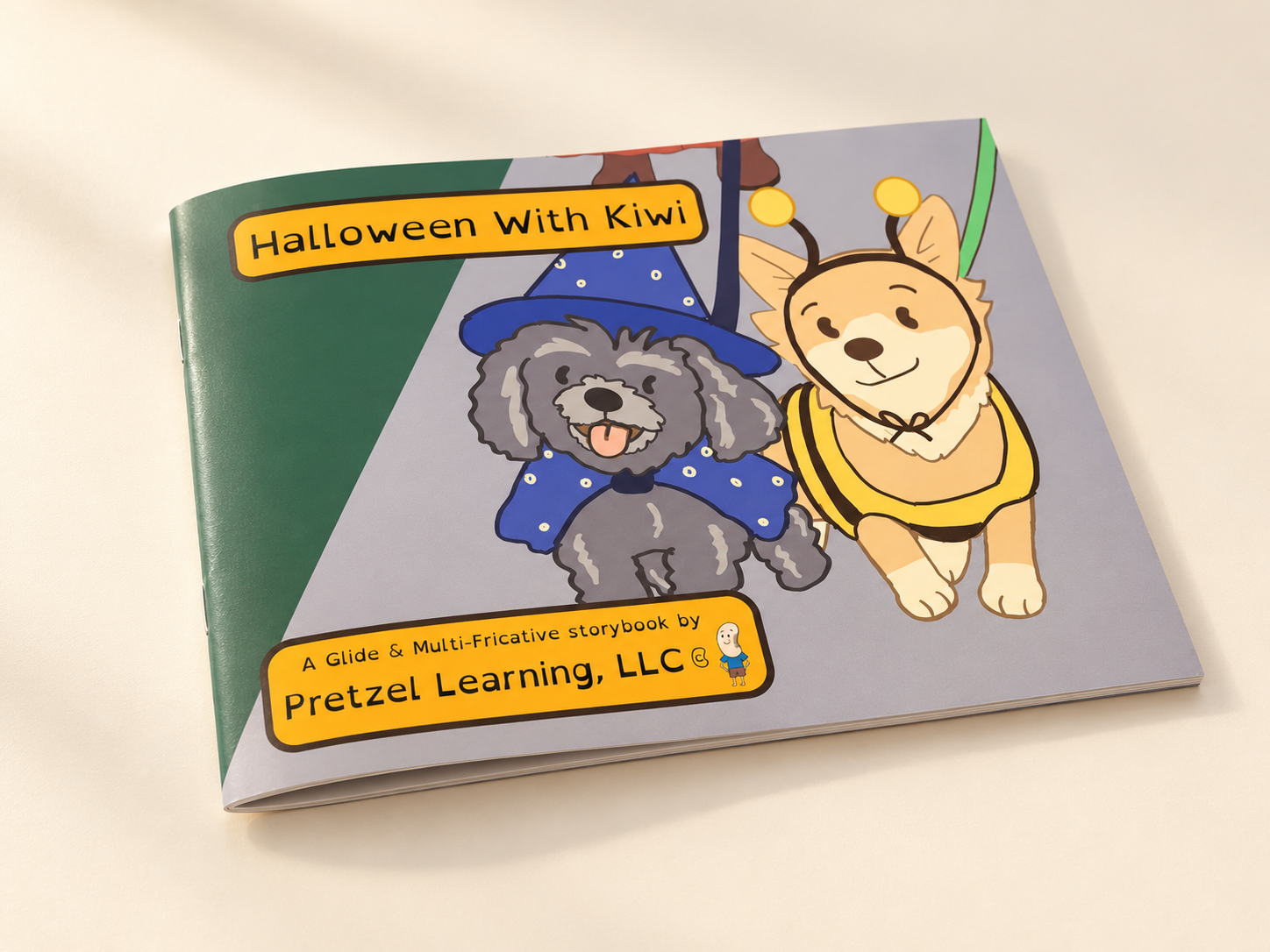 Image 1 of 1